If calls are reaching another number, or you notice a forwarding message you did not set up, check the phone's calling settings and your carrier account. To check and disable call forwarding on most Android phones, open the Phone app, find Call forwarding—also called Call divert or call diversion—under calling or supplementary-service settings, review every forwarding rule, and disable any rule you do not want. If Call forwarding is not available in the Phone app, check your carrier account or contact the carrier to review network-level forwarding rules. The exact menu and available options depend on your manufacturer, Android version, SIM, and carrier.
Call forwarding can be useful when you are unavailable, but an unexpected setting deserves investigation. It does not, by itself, prove that someone is spying on you. Forwarding may have been enabled by a carrier feature, a business phone service, an account change, or an accidental tap.
What call forwarding does#
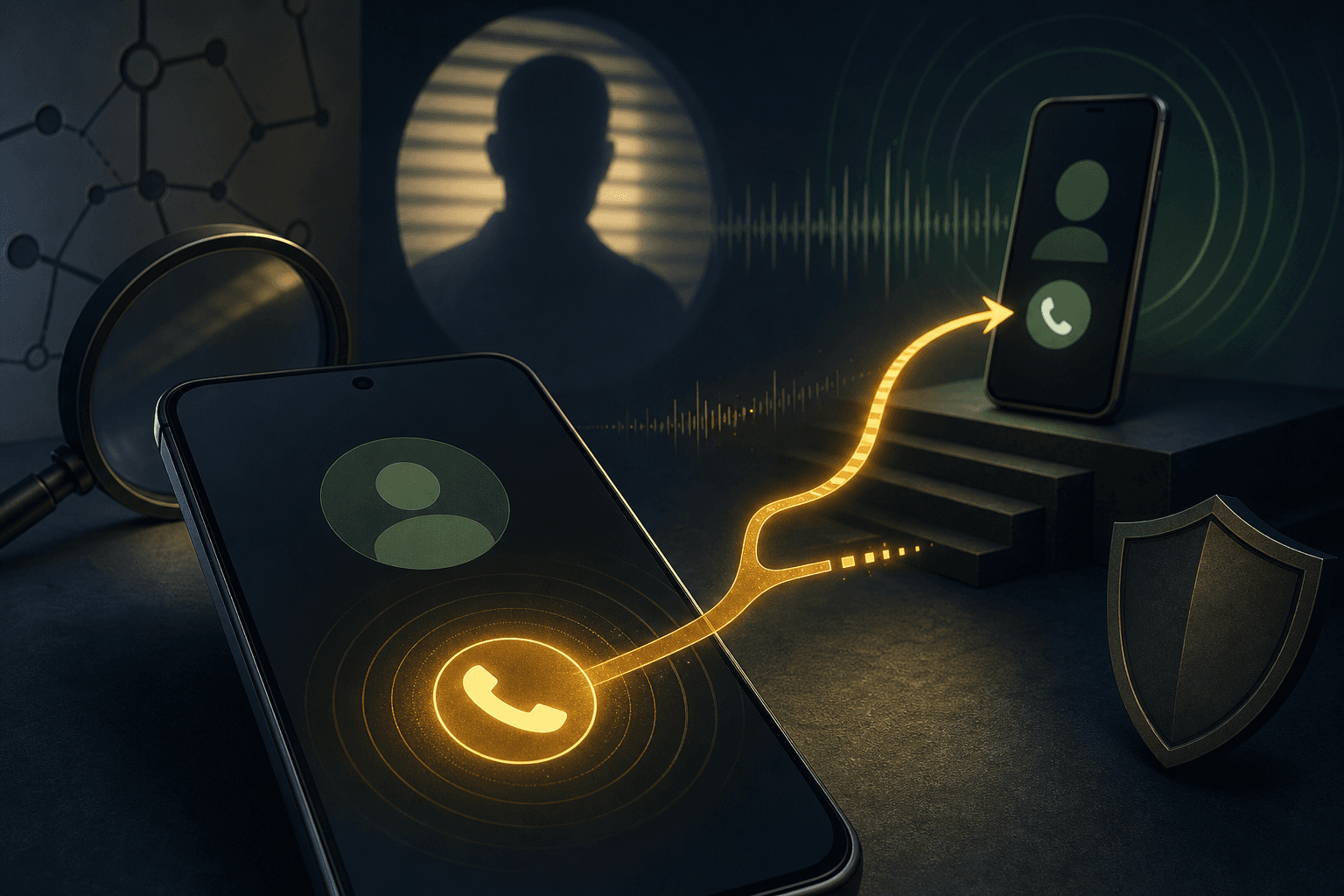
Call forwarding, sometimes called call divert, routes incoming voice calls to another number instead of—or in addition to—ringing your phone. It is a telephony or carrier feature, not an Android app permission.
Common forwarding modes include:
| Forwarding type | What it generally means |
|---|---|
| Unconditional forwarding | All incoming calls are sent to another number without ringing your phone first. |
| Forward when busy | Calls are redirected when you are already on another call. |
| Forward when unanswered | Calls are redirected after you do not answer within a set time. |
| Forward when unreachable | Calls are redirected when your phone is off, out of coverage, or otherwise unavailable. |
The names may differ. Some phones show several separate rules, while others show a single carrier-managed setting.
Does unconditional call forwarding mean your phone is tapped? No. Unconditional call forwarding does not, by itself, mean that your phone is tapped or monitored. It means incoming calls may be routed to another number before your phone rings. A voicemail configuration, business service, carrier feature, account change, or someone with access to the phone or account could explain the setting.

How to check call forwarding on Android#
Use this sequence to check whether call forwarding or call divert is active and to review every forwarding rule:
- Open the Phone app—the app you use to make calls.
- Tap the three-dot menu or Settings.
- Look for Calls, Calling accounts, Supplementary services, or a similar option.
- Select the SIM or mobile account you want to inspect if your phone has two SIMs.
- Tap Call forwarding, Call divert, or Call diversion.
- Review each option, including unconditional, busy, unanswered, and unreachable forwarding.
A setting may display a destination number, an active status, or an option to enable the feature. If it shows a number you do not recognize, write it down before changing anything. The number may belong to voicemail or a legitimate business service, so do not assume it is malicious solely because it is unfamiliar.
If you cannot find these controls, search the Settings app for call forwarding, call divert, or supplementary services. On some devices, the Phone app does not expose all carrier features. Your carrier's account portal or support team may be the only place to view or change them.
How to turn call forwarding off#
The quickest way to turn off call forwarding on Android is to open the Phone app settings, select the relevant SIM, open Call forwarding or Call divert, and disable every visible rule. Then reopen the screen to confirm that the rules are disabled.
After reviewing the rules, use the same Call forwarding screen to disable forwarding you do not want:
- Open each forwarding category.
- Select Turn off, Disable, or Cancel, if that option is available.
- Repeat the process for unconditional, busy, unanswered, and unreachable forwarding.
- Reopen the call-forwarding screen and confirm the rules show as disabled.
- Place a test call from another phone, if practical.
- Ask the caller whether your phone rang normally and whether the call reached voicemail as expected.
Conditional call forwarding may appear as separate busy, unanswered, and unreachable rules. It is not always controlled by one switch, so open and disable each displayed conditional rule rather than assuming that turning off unconditional forwarding removes them all.
Check all four categories rather than disabling only unconditional forwarding. Conditional rules can remain active even when unconditional forwarding is off. Also check the carrier account for forwarding or call-management features that may override the device setting. A phone-level change may not remove a network-level rule, so you may need to use the carrier account or contact the carrier if Turn off or Disable is unavailable, a rule remains active, or forwarding returns.
Search results often recommend short dialing codes for cancelling call forwarding. These codes are not universal: they can vary by carrier, country, network technology, and plan. Use a code only when it comes from your carrier's official support documentation or a verified carrier representative. Do not rely on a random code list from an unverified website.
Why call forwarding may appear active#
An active forwarding message can have several explanations:
- You enabled it previously and forgot about it.
- A previous phone, work profile, or dual-SIM configuration left a rule active.
- The carrier enabled voicemail or another call-management feature.
- A business or family plan administrator changed a feature.
- The carrier account, SIM, or eSIM was recently changed.
- Someone with access to your phone or carrier account changed the setting.
Forwarding is different from app-based tracking. An app with location permission may collect location data, while call forwarding routes voice calls through the telephone network. If you are investigating broader privacy concerns, review Android app permissions for location, camera, and microphone separately.
What to do if forwarding returns or you cannot disable it#
If the setting comes back after you disable it, contact your carrier through an official phone number or its verified website. Ask the carrier to:
- Confirm every active forwarding rule on the line.
- Remove forwarding at the network level.
- Check whether voicemail, call screening, business calling, or another service is responsible.
- Review recent changes to the mobile account.
- Add or verify an account PIN or other protection against unauthorized changes.
Do not give a caller remote access to your phone just because they claim to be carrier support. Use contact details from your bill, the carrier's official app, or its official website.
If your phone recently lost service, stopped receiving verification texts, or showed an unexpected SIM or eSIM change, read the guide to SIM swap warning signs on Android. Forwarding and a SIM-swap event are different issues, but both can justify checking the carrier account promptly.
Keep a record of the date, displayed forwarding number, carrier responses, and account alerts. If you think another person may be monitoring your phone and taking action could put you at risk, avoid confronting them from the device. Consider using a safer device to contact a trusted person or support service.
Call forwarding versus spyware#
Call forwarding alone is not proof of spyware or phone interception. It only shows that calls may be routed according to a telephone-network rule. It does not tell you who created the rule or whether other data is being accessed.
A broader investigation should consider separate evidence, such as:
- Unexpected changes in your Google or carrier account.
- Unfamiliar apps or device administrators.
- Unknown recording tools capturing conversations (see our checklist on call recording on Android).
- Security alerts or password-reset messages you did not request.
- Loss of cellular service or unexplained SIM changes.
- Location sharing that you did not enable.
Battery drain, overheating, unusual data use, or one unfamiliar app also does not prove surveillance. For a wider review, use the steps in how to detect spyware on Android, but remember that no single scan or permission review can identify every form of monitoring.
A quick decision guide#
- Forwarding is off and calls behave normally: no forwarding action is needed; continue with normal account-security checks if something else seems unusual.
- Forwarding is active and you recognize the number: disable it if you no longer need it, or confirm that it is voicemail or a service you use.
- Forwarding is active and the number is unfamiliar: document it, disable it if possible, and contact the carrier through an official channel.
- Forwarding returns after removal: ask the carrier to remove the rule at the network level and review account access.
- Forwarding is unavailable in Android settings: check the carrier account or contact carrier support; the device may not control that feature.